
12,500Resident Population
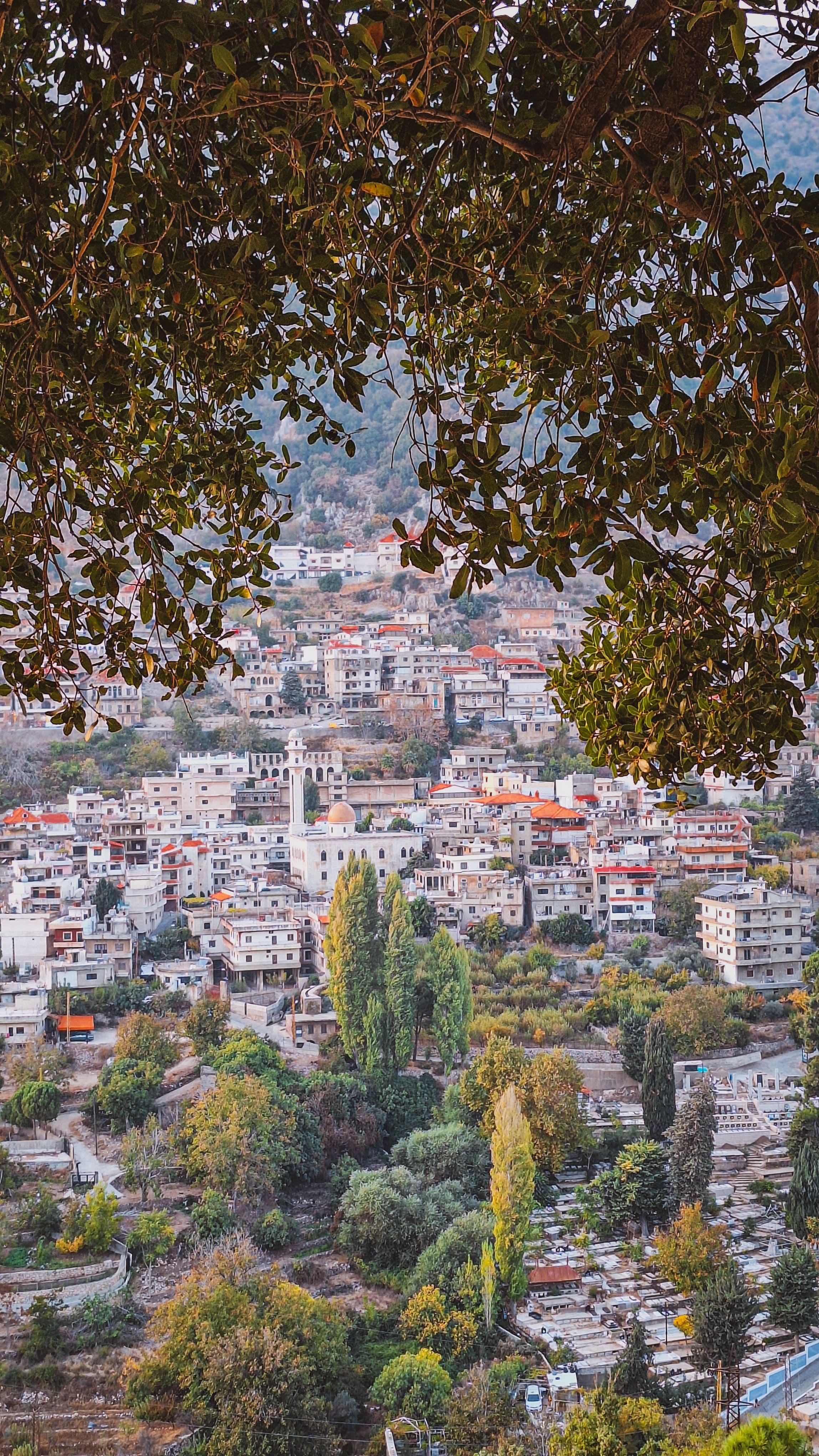
About Machghara
Machghara is a historic town in the West Bekaa, known for its natural landscape, agricultural heritage, strong community, and cultural identity.
25,000Total Town Population
24.28km²Area
1,050mElevation
82kmDistance from Beirut
Machghara at a Glance
Machghara is one of the prominent towns of the West Bekaa District in Lebanon. Surrounded by mountains, agricultural lands, and natural scenery, the town combines a rich history with an active and closely connected community.
Machghara is known for its cultural heritage, traditional character, local institutions, and the important role played by its residents both in Lebanon and abroad. This official website provides residents and visitors with municipality news, development projects, public announcements, events, services, and information about the town.
A Village from My Homeland: Machghara
Machghara lies in the West Bekaa District on the eastern slopes of the Mount Lebanon range, at an elevation of about 1,050 metres above sea level. It is roughly 82 kilometres from Beirut and covers approximately 2,325 hectares, or 23.25 square kilometres, making it one of the area’s important population and service centres.
The town held an important administrative role from the early years of the French Mandate. In 1920 it served as a local administrative and security centre known as the “Dabtiyeh,” attracting public offices and services. In 1960, Machghara was officially classified as a summer resort, reflecting its mountain setting, climate, and landscape.
Agriculture and leather tanning historically formed the backbone of the local economy. Tanning expanded dramatically, with the town once hosting around eighty tanneries and becoming widely associated with the craft. War, foreign competition, and the migration of skilled labour later caused the industry to decline.
Machghara was directly affected by the conflicts and military pressures that struck the southern Bekaa during the final decades of the twentieth century. Its location near confrontation lines led to infrastructure support projects involving water, electricity, roads, sewage systems, public health services, and the construction of a government hospital.
Scholar Anis Freiha connected the name Machghara with an ancient Phoenician root associated with flowing or gushing water. The interpretation fits a town long known for abundant springs and water sources that shaped agriculture, daily life, and the surrounding landscape.
The town also preserves evidence of a deep historical past. Its best-known landmarks include the shrine of Prophet Nun, rock-cut caves and sarcophagi, and archaeological remains associated with Phoenician, Roman, and Crusader periods. Together, these places form an important part of Machghara’s local memory and heritage landscape.
Drinking water has traditionally come from several local springs and sources, while electricity is linked to the Litani area. Telephone and postal services, a government hospital, medical centres, and other social and health facilities help Machghara serve both its residents and neighbouring communities.
Although agriculture remains part of the town’s identity, public- and private-sector employment, trade, and services have become major sources of income. This shift reflects Machghara’s evolution from an economy strongly associated with farming and tanning into a local centre for housing, commerce, education, health, and services.
Machghara is also distinguished by its religious, educational, and social institutions, including schools, associations, and public and private organisations. Despite demographic change, migration, and the effects of war, the town has retained a broad cultural and social role within West Bekaa.
Many notable figures from Machghara have contributed to music, media, law, medicine, education, politics, and public life. Among the best known are composer Zaki Nassif, broadcaster Riad Sharara, television presenter Tony Baroud, judge and academic Hassan Awada, and lawyer and former minister Fouad Iskandar Rizk, alongside many clerics, physicians, judges, academics, and professionals.
Machghara today combines a mountain landscape, an agricultural and industrial memory, and a continuing administrative and service role. Its springs, archaeological traces, old neighbourhoods, and modern institutions together tell the story of a West Bekaa town that preserved its identity while adapting to major historical change.
Verses for Machghara
O Machghara, within you lies a cave with two eyes,From two communities, two flowing tears arise.One sheds Mary’s tears for Christ,And one sheds Zaynab’s tears for Hussein.
Coexistence
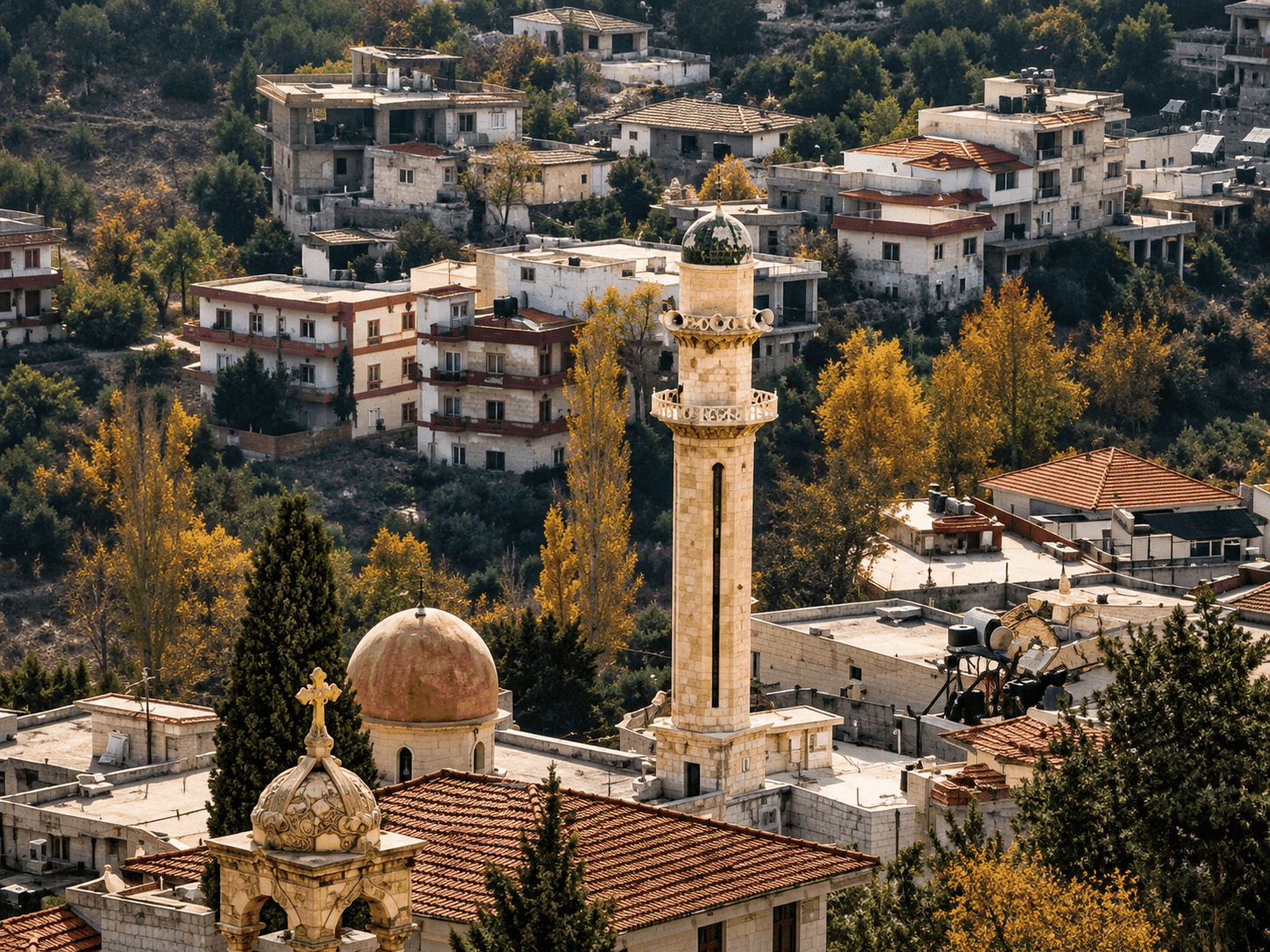
Machghara: Coexistence as an Identity and a Way of Life Machghara is distinguished by its religious and social diversity, bringing together Catholic and Orthodox Christian communities alongside Shia Muslims within one town. Its churches and mosques stand close to one another, forming an essential part of Machghara’s historical and social identity. Coexistence in Machghara has never been merely a slogan. It is reflected in everyday life, in the relationships between families, and in the shared participation in public, social, and religious occasions. Events that bring together Christian and Muslim religious leaders, the municipality, local representatives, and residents demonstrate that belonging to Machghara remains a common bond that unites everyone. Despite the difficult circumstances the town has endured, including war, displacement, and successive crises, its residents have continued to uphold the values of peaceful coexistence and civil harmony. Genuine coexistence does not require differences to disappear; rather, it means respecting them and transforming diversity into a source of strength and enrichment for the entire community. Through its diverse history and shared collective memory, Machghara carries a clear message to future generations: the town belongs to all its people. Its unity is built through love, mutual respect, cooperation, and the belief that diversity is an essential part of its beauty and identity.
Discover Machghara
Key aspects of the town’s history, landscape, and local life.
History
Machghara has a long and rich history shaped by its location in the West Bekaa and by generations of residents who preserved the town’s social, cultural, and agricultural identity. Its historic neighborhoods, traditional buildings, local institutions, and community memory form an important part of its heritage.
Geography
Machghara is located in the West Bekaa District of the Bekaa Governorate. The town lies within a mountainous and agricultural landscape at an elevation of approximately 1,020 to 1,050 metres above sea level.
Climate
Machghara experiences a mountain-influenced climate, with cold and rainy winters and warm, generally dry summers. Its elevation contributes to cooler temperatures compared with lower parts of the Bekaa Valley.
Agriculture
Agriculture has traditionally played an important role in Machghara’s economy and landscape. The surrounding lands support a variety of seasonal crops, orchards, olive trees, vineyards, and other agricultural activities.
Heritage
Machghara’s heritage is reflected in its traditional architecture, local customs, religious and social institutions, oral history, cuisine, and strong connection between residents living in the town and members of the community abroad.
Community
Machghara is known for its active and closely connected community. Local associations, schools, public institutions, cultural initiatives, businesses, and volunteers contribute to the town’s social life and development.